
Many parents wonder what a typical day looks like inside a preschool classroom. From the outside, it may seem like children are simply playing all day, but every part of the schedule is thoughtfully designed to support early childhood education and encourage healthy toddler development.
Preschool classrooms run on routines. Predictable schedules help children feel safe and confident, while also giving teachers the opportunity to guide learning through play, exploration, and everyday experiences. While every program may look a little different, most preschool classrooms follow a rhythm that balances learning, movement, rest, and care.
Here is what a typical day with tiny humans might look like.
Morning Arrival
The day begins with warm greetings as children arrive in the classroom. Some children rush in excited to see their friends, while others need a few extra minutes to say goodbye to their parents.
Teachers help children hang up their backpacks, settle into the room, and transition into the day. These small routines are important for toddler development because they help children practice independence and build confidence.
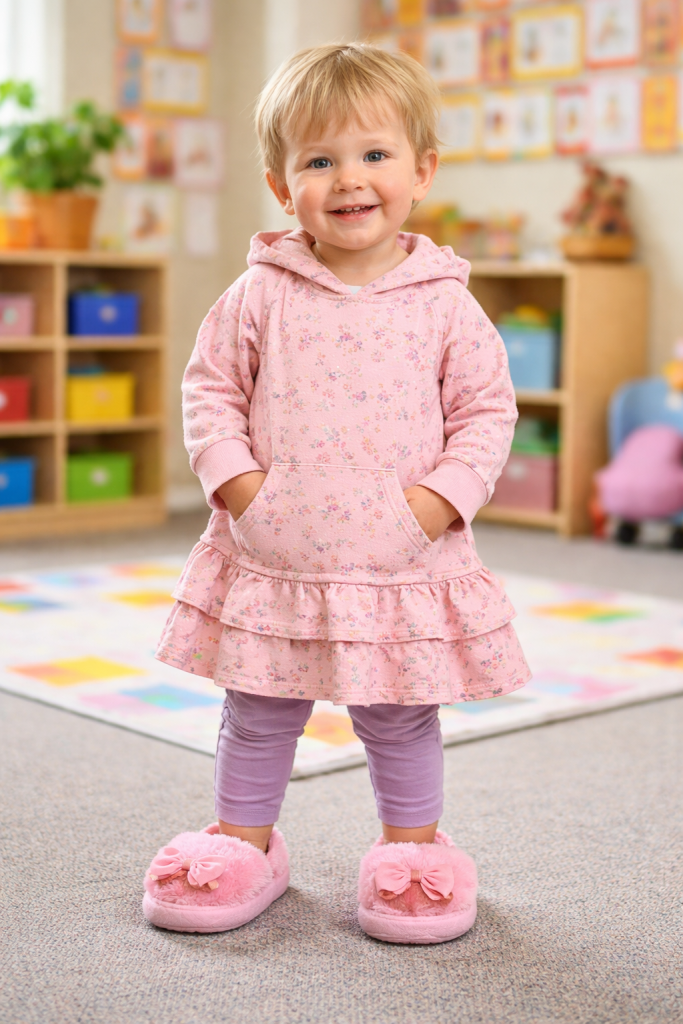
Morning arrivals can also bring some memorable moments. One day, a child proudly walked into class wearing his sister’s clothes perfectly matched with his sister’s slippers. He looked completely satisfied with his outfit and happily announced that he dressed himself. In preschool, independence is always worth celebrating—even when the fashion choices are unexpected.
Breakfast
Breakfast is often the first group activity of the day. Children sit together at the table, talk with their friends, and practice important self-help skills such as holding utensils, pouring drinks carefully, and cleaning up their space.
These routines are a meaningful part of early childhood education because they help children build independence and social skills.
Sometimes breakfast conversations are just as interesting as the food itself. One morning, a child looked closely at his banana before announcing to the whole table, “My banana is smiling at me.” Soon, several toddlers were examining their bananas to see if theirs were smiling too.
Potty Time
Potty time happens regularly throughout the preschool day. Young children are still developing body awareness and self-care skills, so scheduled bathroom breaks help them learn routines and responsibility.
These daily habits support healthy toddler development as children learn to recognize their needs and practice personal hygiene.
One toddler in the classroom became so familiar with the routine that she began announcing potty time herself. As soon as she heard the reminder, she would confidently pull down her pants and underwear right where she was standing and proudly say, “Potty!” before the teacher quickly guided her toward the bathroom.
Moments like these remind teachers that toddlers are eager learners—even if they are still figuring out exactly where certain routines should happen.
Circle Time
Circle time is when the class gathers together for songs, discussions, and short lessons. This part of the day helps children practice listening, participating in group conversations, and building communication skills. These experiences support both early childhood education and toddler development.
During one circle time lesson about Martin Luther King Jr. and his “I Have a Dream” message, the teacher asked the class what they wanted to be when they grow up.
Several hands quickly went up. One child proudly said he wanted to be a dinosaur. Another thought carefully before answering that he wanted to be a cow.
Moments like this are part of the charm of teaching preschoolers. While they may not fully understand big historical lessons yet, they are learning how to express their dreams—and sometimes those dreams are wonderfully imaginative.
STEAM Work Time
After circle time, children move into STEAM learning, which includes Science, Technology, Engineering, Art, and Math. In preschool classrooms, this learning happens through hands-on activities rather than worksheets.
Children might build structures with blocks, experiment with water, create art projects, or explore simple science materials. These activities encourage curiosity, creativity, and problem-solving while supporting both early childhood education and toddler development.
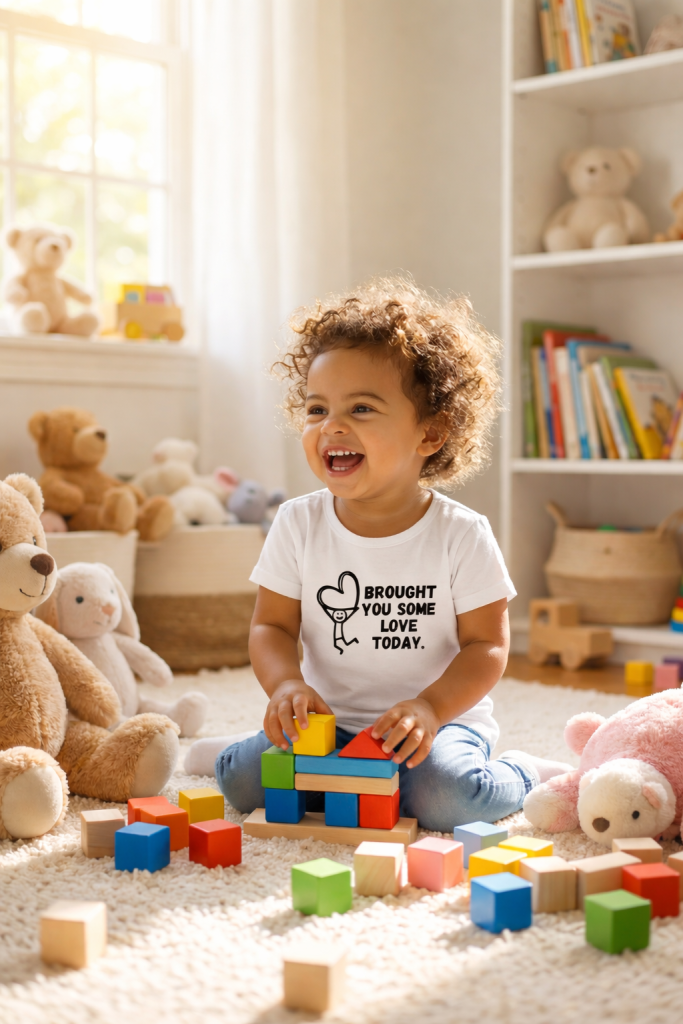
During one STEAM activity, a child carefully stacked blocks and told the teacher she was building a house. When the teacher asked who the house was for, the child thought for a moment and then confidently replied that she was building it so it could blow up like fireworks.
In preschool, even engineering projects sometimes come with dramatic endings.
Choice Time (Interest Centers)
Choice time allows children to explore different areas of the classroom based on their interests. These areas are often called interest centers, such as the block area, dramatic play kitchen, reading corner, or art table.
During this time, children develop independence, creativity, and cooperation while strengthening important skills in toddler development.
One day during dramatic play, two toddlers were working very seriously in the classroom kitchen. They combined several toy foods together and eventually brought their creation to the teacher.
When asked what the dish was, they proudly replied, “It is dinner.”
The dinner included bread and pasta—but it was also served with a toy pig and a small toy car mixed right in with the meal. In the imaginative world of preschoolers, that combination apparently made perfect sense.
Outdoor Play
Outdoor play is one of the most exciting parts of the preschool day. Running, climbing, and exploring the playground help children develop strong muscles, coordination, and confidence.
Outdoor time also supports emotional well-being and healthy toddler development. Fresh air and open space allow children to release energy and explore their environment.
One boy in the class had a special routine every time the class went outside. He slowly walked around the playground collecting dried leaves from the ground. After gathering a few, he carefully handed them out to his favorite friends and teachers.
To him, the leaves were small gifts. And to everyone receiving them, it felt like a very sweet act of kindness from a tiny human.
Lunch
After a busy morning, children gather together for lunch. Mealtime is an opportunity for conversation, practicing manners, and developing independence.
Teachers encourage children to feed themselves and practice using their utensils. These everyday skills play an important role in toddler development.
One child in the class was determined to use his spoon all by himself, even though he was still learning how to hold it properly. He refused help because he wanted to do it independently. With great determination, he scooped his food again and again—although more than half of it usually fell back onto his plate.
Even so, he continued trying with the same determination. Every scoop was practice, and every attempt was a step toward independence.
Nap Time
Preschool days are full of movement and learning, so rest time is an important part of the routine. During nap time, the lights are dimmed and soft music may play while children rest on their mats.
Rest helps children recharge after a busy morning and supports healthy toddler development.
One child in the classroom who is on the autism spectrum sometimes becomes overstimulated by the music during rest time. When this happens, he may climb onto shelves to reach the textured blind strings or search for toys with interesting textures.
To help support him, the teacher prepared a sensory box filled with colorful ice that he could explore safely during rest time. The cool textures help him regulate his senses and settle more comfortably.
Supporting each child’s needs is an important part of early childhood education.
Snack Time
After nap time, children gather for a small snack to restore their energy.
Snack time often becomes a lively social moment where toddlers talk about their food, their friends, and sometimes even their teachers.
On one occasion, two toddlers began debating not about the snack on the table, but about their teacher. One pointed proudly and said, “My Jenny.” Another quickly responded, “Mine.”
The discussion continued back and forth as both toddlers insisted that the teacher belonged to them.
In the world of tiny humans, sharing toys may be negotiable—but sharing their favorite teacher is much more serious.
Recall
Recall time gives children the opportunity to talk about what they experienced earlier in the day. Teachers ask questions about what children built, played, or discovered.
This helps strengthen memory, language skills, and communication, which are important parts of early childhood education and toddler development.
After a lesson about sea animals, the toddlers were asked to copy the sounds of the animals they had learned about. One child made a long moaning sound like a whale. Another enthusiastically made the loud grunting noise of a sea lion.
Then another child confidently said, “Moo.”
When the teacher asked why, he explained very seriously that he was copying the sea cow.
Story Time
Story time brings the class together for a calm and cozy moment before the day ends. Reading books helps children develop vocabulary, imagination, and listening skills, all of which are important for toddler development.
One day the teacher read The Pout-Pout Fish to the class. After finishing the story, the teacher asked if the children liked it.
One child quickly said he did not like the story.
When asked why, he replied, “Because the puffer fish looks like daddy.”
The teacher realized the child actually knew about puffer fish, but he could not yet distinguish that the character in the book was a pout-pout fish, not a puffer fish.
Moments like these show how children connect new information with what they already know—and sometimes those connections are very creative.

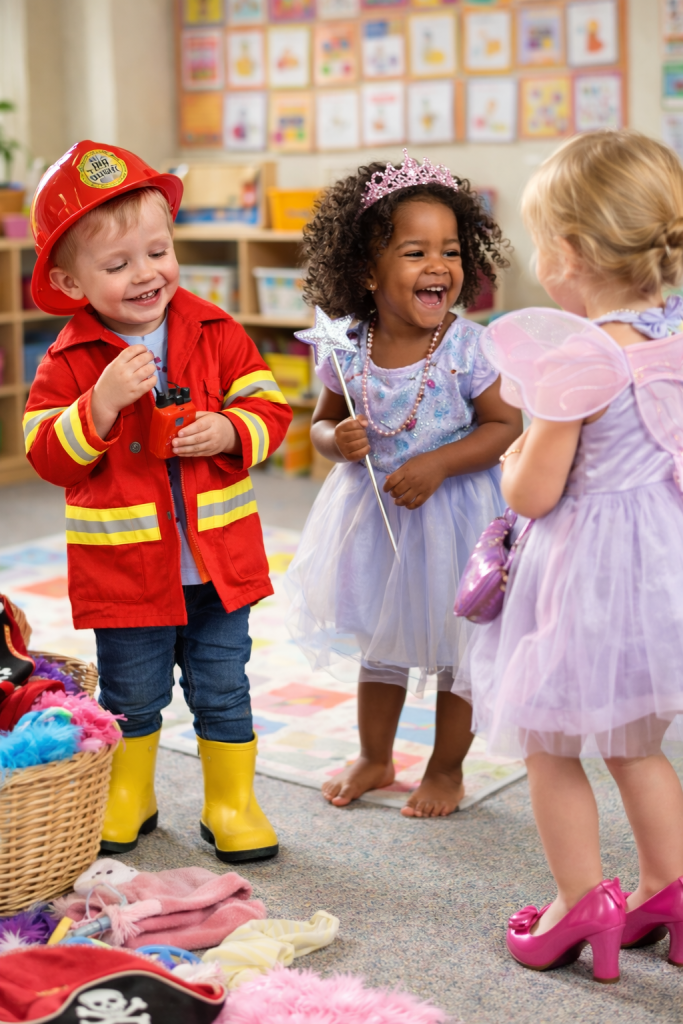
Dramatic Play
Dramatic play is one of the most engaging parts of the preschool classroom. In this area, children pretend to cook, take care of babies, go shopping, or act out everyday situations they see at home.
This type of play is extremely valuable in early childhood education because it helps children develop imagination, language skills, and social understanding. Through dramatic play, children practice cooperation, problem solving, and communication, all of which support healthy toddler development.
In the dramatic play center, children often take on different roles. One child may become the chef, another the parent, and another the customer in a pretend restaurant. Teachers often hear conversations that sound very similar to what children hear at home.
One day during dramatic play, a toddler carefully placed a baby doll into a toy shopping cart and began pushing it around the classroom. The teacher asked where the baby was going. The toddler replied very seriously, “The baby needs groceries.”
When the teacher asked what groceries the baby needed, the toddler thought for a moment and answered, “Cookies.”
In preschool, dramatic play often reveals the wonderfully imaginative way toddlers understand the world around them.
The Magic of a Preschool Day
A preschool day may look simple from the outside, but every moment supports early childhood education and healthy toddler development.
Through routines, play, laughter, and exploration, children are learning how to communicate, build friendships, solve problems, and understand the world around them.
And somewhere between the banana smiles, dramatic block houses, and sea cow sounds, tiny humans are growing a little more confident every single day.
 Growing With Tiny Humans
Leave a comment