
Sensory bins are a highly effective tool in early childhood education, supporting sensory play, play-based learning, and whole-child development in a hands-on, engaging way. Through thoughtfully designed themes such as farm, ocean, forest, and insects, educators can create meaningful learning experiences that naturally build language development, cognitive development, fine motor skills, and social-emotional development. These rich sensory environments allow preschoolers to explore, discover, and make real-world connections while strengthening foundational skills through active, child-centered learning.

To effectively utilize sensory bins, it is important to provide purposeful tools such as scoops, measuring cups, tweezers, small shovels, and rakes. These tools encourage digging, pouring, transferring, and sorting—key actions that develop fine motor control, hand-eye coordination, and problem-solving skills. Educators can extend learning by modeling descriptive language, introducing new vocabulary, and asking open-ended questions that promote critical thinking and communication. Simple prompts like “What do you feel?” or “What is the animal doing?” can transform sensory play into a powerful opportunity for language-rich interaction.
In addition, sensory bins support play-based learning by giving children the freedom to explore materials, experiment with textures, and engage in imaginative play at their own pace. This type of exploration fosters curiosity, creativity, and independence while encouraging cooperative play and peer interaction. For children who benefit from sensory input, these bins also provide a calming and accessible entry point into learning. When used intentionally, sensory bins become more than just an activity—they become a structured yet flexible strategy that promotes early childhood development through purposeful, engaging, and meaningful play.
Here are 10 Sensory Bin Ideas for Animal Themes:
Farm Animal Sensory Bin

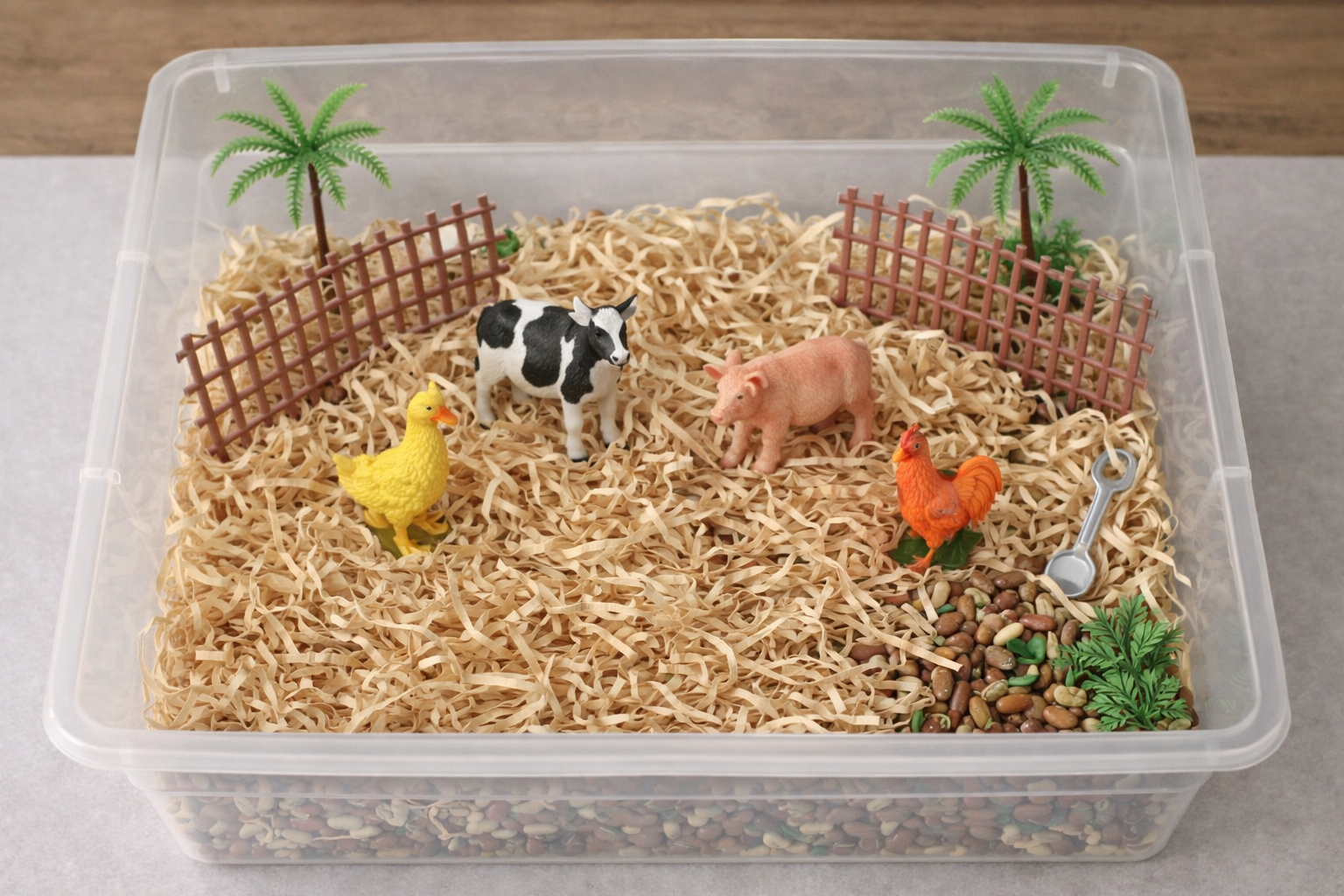
In early childhood education, this farm animal sensory bin supports sensory play and play-based learning by using a clear plastic container with a base of hay layered over dried beans or legumes for added texture and sound. Plastic farm animals such as cows, pigs, ducks, and rabbits are arranged with small fences and greenery to create a realistic farm setting that encourages imaginative play and language development. A small shovel promotes fine motor skills through scooping and digging, while the overall setup supports cognitive development and social-emotional development as children explore and interact.
Farm Animal Sensory Bin – Pasta Style

This variation of the farm sensory bin uses dyed pasta in earthy green and brown tones to create a visually engaging base that enhances sensory play in early childhood education. The textured pasta encourages scooping and tactile exploration, while farm animal figurines, fences, and greenery support imaginative play and storytelling. This setup strengthens fine motor skills, language development, and cognitive development through hands-on, play-based learning experiences.
Pigs Play Sensory Bin

Designed to mimic a real farm environment, this sensory bin uses a mixture of soil and water to create mud, offering a rich sensory play experience that supports early childhood development. Plastic pig figurines are placed throughout the bin to encourage imaginative play and storytelling, while the varying textures promote fine motor skills and sensory exploration. This type of play-based learning also supports social-emotional development as children engage in cooperative and messy play.
Ocean Animals Sensory Bin

Designed to mimic a real farm environment, this sensory bin uses a mixture of soil and water to create mud, offering a rich sensory play experience that supports early childhood development. Plastic pig figurines are placed throughout the bin to encourage imaginative play and storytelling, while the varying textures promote fine motor skills and sensory exploration. This type of play-based learning also supports social-emotional development as children engage in cooperative and messy play.
Desert Animal Sensory Bin

Using fine sand, desert animal figurines, and artificial plants, this sensory bin introduces children to new habitats while supporting sensory play and cognitive development. The soft sand provides a calming tactile experience, while children strengthen fine motor skills through scooping and shaping. This setup encourages imaginative play, language development, and exploration within a play-based learning environment.
Arctic Animal Sensory Bin

This sensory bin uses blue-tinted water and sea animal figurines to simulate an arctic or ocean environment, offering a soothing sensory play experience in early childhood education. Children explore textures and movement while engaging in imaginative play and developing descriptive language skills. The setup supports cognitive development, fine motor skills, and sensory regulation through play-based learning.
Forest Animal Sensory Bin

A forest sensory bin uses dried leaves, moss, logs, and woodland animals to create a nature-inspired environment that supports sensory play and early childhood development. The layered textures encourage tactile exploration, while animal figurines promote imaginative storytelling and language development. This play-based learning experience also strengthens social-emotional development as children collaborate and explore together.
Bird and Nest Sensory Bin

This sensory bin features colored pasta, twigs, leaves, and small nests with eggs to create a bird habitat that encourages observation and sensory play. Children engage in imaginative play while building language development skills through describing birds and their environments. The materials support fine motor skills and cognitive development, making this a meaningful play-based learning experience in early childhood education.
Insect Sensory Bin

Using shredded green paper and a variety of insect figurines, this sensory bin creates a bug-themed environment that supports sensory play and curiosity in early childhood education. Children explore textures while practicing sorting and classification, strengthening fine motor skills and cognitive development. This play-based learning activity also encourages language development as children name and describe insects.
Dinosaur Sensory Bin

This dinosaur sensory bin uses dried leaves, moss, logs, and dinosaur figurines to create a prehistoric environment that encourages exploration and imaginative play. The varied textures support sensory play, while children develop fine motor skills through hands-on interaction. This setup promotes language development, cognitive development, and social-emotional growth within a play-based learning framework.
Leave a Reply